Hampshire AI - Cyber Security in the Age of AI
14 Oct, 2026

With the 2026 South Coast Tech & Innovation Awards having recently taken place, we wanted to catch up with some of last year's winners to see how their businesses and technologies have evolved over the past 12 months.
As sponsors of the AI Innovation of the Year category, we caught up with our 2025 winner, ICS.AI, to hear about their progress, how the AI landscape has changed and what they see coming next.
Transformation has always been at the heart of our strategy. Since the award, we’ve built on our live, proven public sector AI capabilities to support more complex processes and wider organisational change.
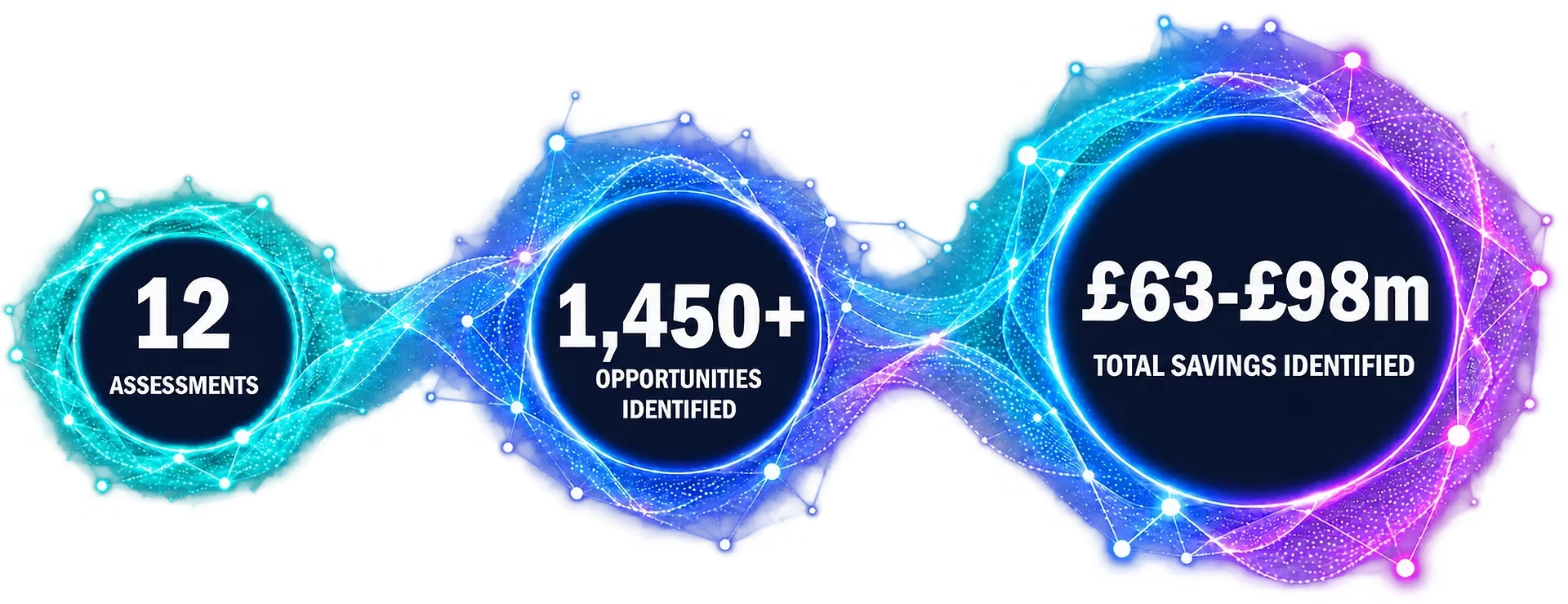
We have now delivered 12 SMART: AI Assessments across local government and higher education. Together they have identified more than 1,450 AI opportunities and £63m to £98m in potential savings, each measured against the organisation’s own baseline and validated by its teams. This gives organisations an evidence-based route from ambition to measurable outcomes.
Our SMART: platform has now processed over 11 million AI transactions – bringing resident engagement, knowledge and governance, and software production together, streamlining many of the separate tools councils still run. At Derby City Council, our AI front door has handled more than 1.4 million resident enquiries, resolving up to 56% against 20% expected, as part of a wider transformation programme that has identified more than £12m in savings.
We’re seeing AI change how software itself is created and maintained, which could help organisations respond faster to changing needs and modernise the legacy IT estates that have held public services back. Governed delivery remains fundamental - our guiding principle is “no autonomy without control” – traceability, security, verification and human sign-off come first.
Local government is past the point of innovation conversations - it’s no longer a case of if organisations will adopt AI, but when and how. This is supported by the LGA reporting that 95% of councils responding to its survey are exploring or using AI. However, only 21% report realised savings and 56% do not know whether AI has saved them money. Leaders are increasingly recognising that adopting a tool isn’t the same as transforming a service and doesn’t automatically deliver sustainable savings. Value comes from redesigning services and processes, changing how organisations run.
Over 35 councils are receiving around £1.5bn of exceptional financial support for 2026-27, and the LGA projects a £7bn gap by 2028-29. A saving identified for 2028 does not help a council that runs out of road in 2027. Financial pressures combined with rising demand and workforce constraints mean AI needs to help sustain accessible, high-quality services for residents. That’s why our approach centres on transformation programmes, with technology supporting a clear operating model and measurable outcomes.
What has surprised us the most is the speed at which AI has progressed from suggesting code to producing working software. One leading AI lab reports that more than four-fifths of the code merged into its own production systems is written by its AI. For councils, that changes how quickly an outdated or unmet need can become a working application and it opens up legacy systems that were once too costly or risky to touch.
But more capability raises the bar for control. Industry research shows both the progress and the functional gaps that independent evaluation and rigorous testing still uncover. That’s why the standard shouldn’t change: whatever the technology, every application should be checked against what users and services actually need before it goes live.
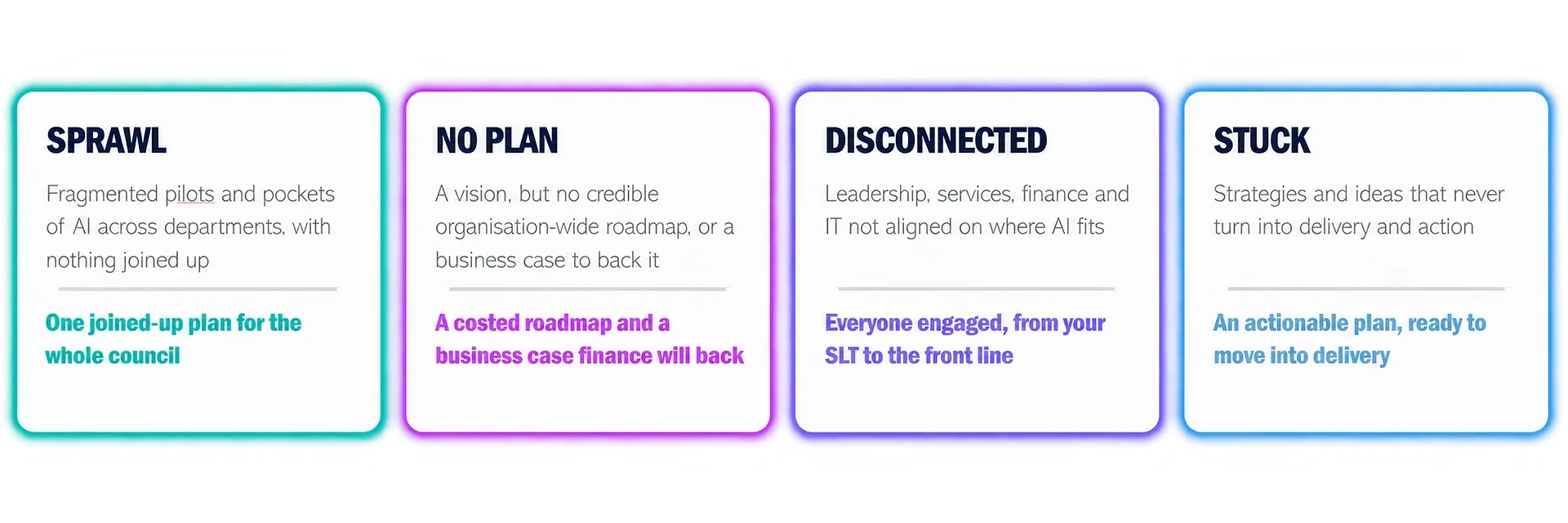
Some are, but many are still investing in point solutions, assuming that they will achieve the transformation their business truly requires. Pilots don’t add up to transformation. Funding is spread thinly, governance is repeated for every project, and use is optional, so the benefits rarely reach the bottom line. With only 21% of councils reporting realised cost savings, every year spent piloting is another year of cuts for councils that can’t afford to wait.
In our assessments, we have seen that the organisations that are succeeding share five things:
These are the foundations ICS.AI helps organisations put in place, moving them from scattered AI pilots to AI transformation that delivers measurable value and better outcomes for the people they serve (residents, staff and students).
Start with the service problem, not the technology, and assess whether AI offers a credible improvement. Our SMART: AI Assessment prioritises opportunities in an organisation’s highest-volume services by impact, feasibility and readiness, and produces a prioritised roadmap and business case built on the organisation’s own baselines and validated by its teams.
Then deliver in stages, with clear success measures and decisions about when to expand. Councils cannot afford endless pilots, but scaling requires evidence and sound foundations. Faster development should make it easier to test assumptions, involve users and adapt while preserving scrutiny. Each stage should show how it contributes to better services, released capacity or financial sustainability.
Keeping up doesn’t mean chasing every new model. It means building the governance and data foundations once, so each new generation of capability can be adopted safely rather than starting again.
Model launches, impressive demonstrations and predictions about AI replacing people attract disproportionate attention. Integration, data quality, maintenance, adoption and operating costs receive too little.
Our AI assessments have focused on automating tasks and releasing capacity; none of the 12 assessments has resulted in or recommended redundancies, compulsory or voluntary. Councils need their people, and AI should free them for the complex cases that need human judgement.
Accountability needs more attention too. Permissions, audit trails and escalation must be explicit, with decisions affecting people’s lives remaining with qualified staff.
Transformation is a continuum, not a destination - new generations of AI capability now arrive every 18 months or so, and each runs alongside the last until it is replaced. Expect more AI agents completing defined tasks across systems, with clear permissions, escalation and human review. AI-powered software delivery will also make tailored applications and incremental modernisation more accessible.
Leaders should map priority workflows, strengthen their data foundations and decide who owns AI-supported outcomes. They also need a plan for how to use the capacity they release. The ability to change how an organisation works will be as important as the technology itself.
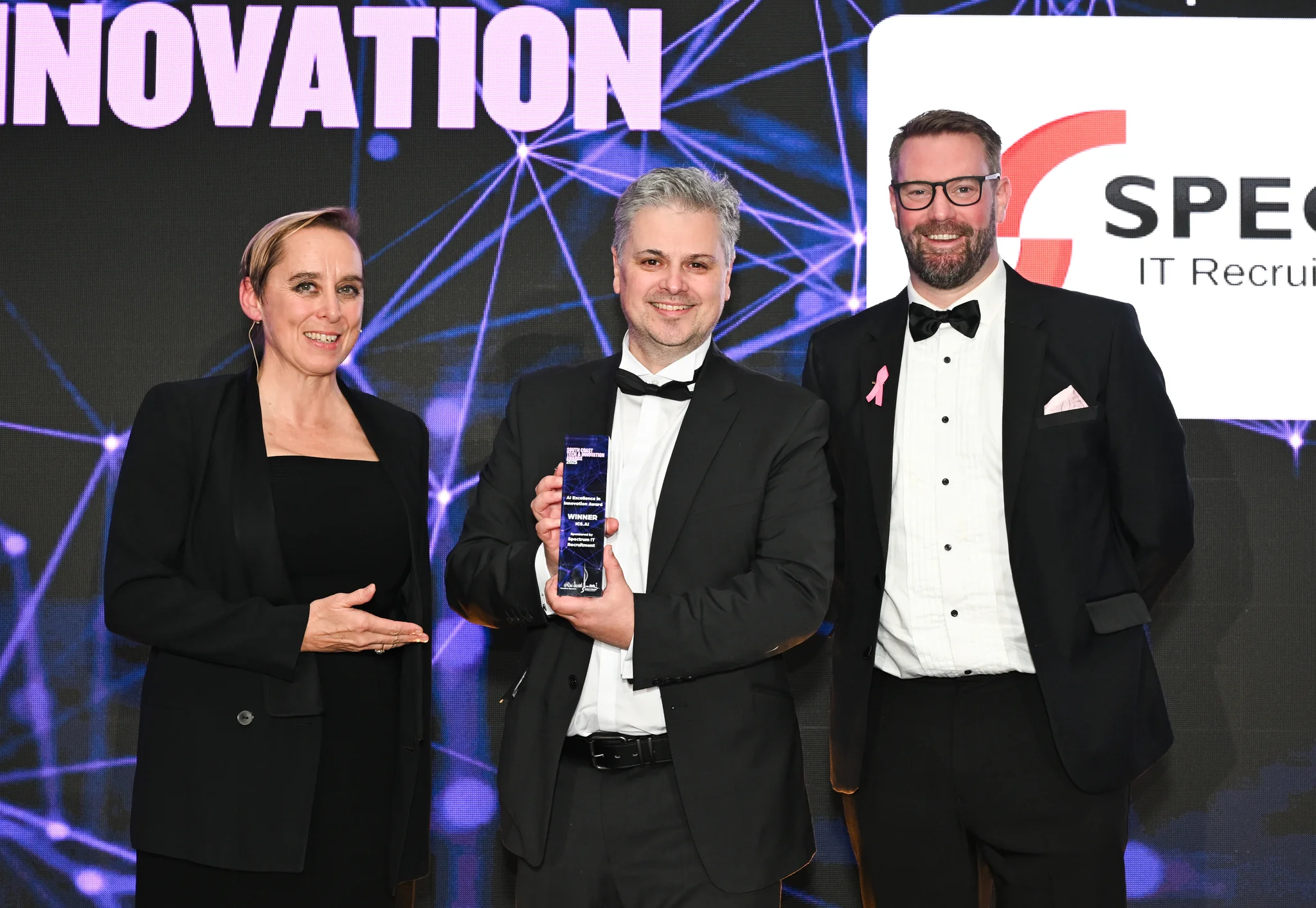
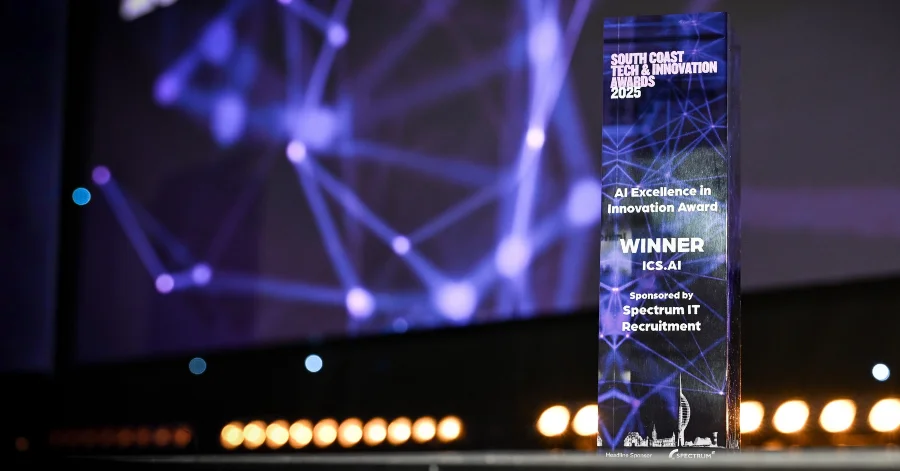
ICS.AI receiving the AI Innovation of the Year Award at the 2025 South Coast Tech & Innovation Awards.
A huge thank you to ICS.AI for sharing their experiences and reflecting on what has been another significant year for AI innovation.
The 2026 South Coast Tech & Innovation Awards have once again highlighted the incredible technology and talent across our region. Congratulations to all this year's winners!
Discover the 2026 South Coast Tech & Innovation Awards winners here.
Sources provided by ICS.AI