How to get into tech: practical advice from IT recruiters
08 Oct, 20269 mins
There isn't one route into the technology industry. Some people start with a Computer Science degree, while others retrain, move into a technology role within their existing company or build their skills independently.
Whatever your starting point, employers want to see more than an interest in technology. You need a clear idea of where you want to go, evidence that you've started developing the right skills and realistic expectations about your first role.
The good news is that you don't necessarily need a traditional Computer Science degree or years of technical experience to make the move. Experience gained in another industry can also be valuable, particularly when you can show how your existing skills transfer into the type of technology role you're targeting. Read our guide to transferable skills in tech for more advice.
In this guide, our IT recruiters share practical advice on:
How to choose a direction
What tech employers expect from candidates
How to gain credibility in the industry
What realistic entry routes exist
The most common misconceptions about entering tech
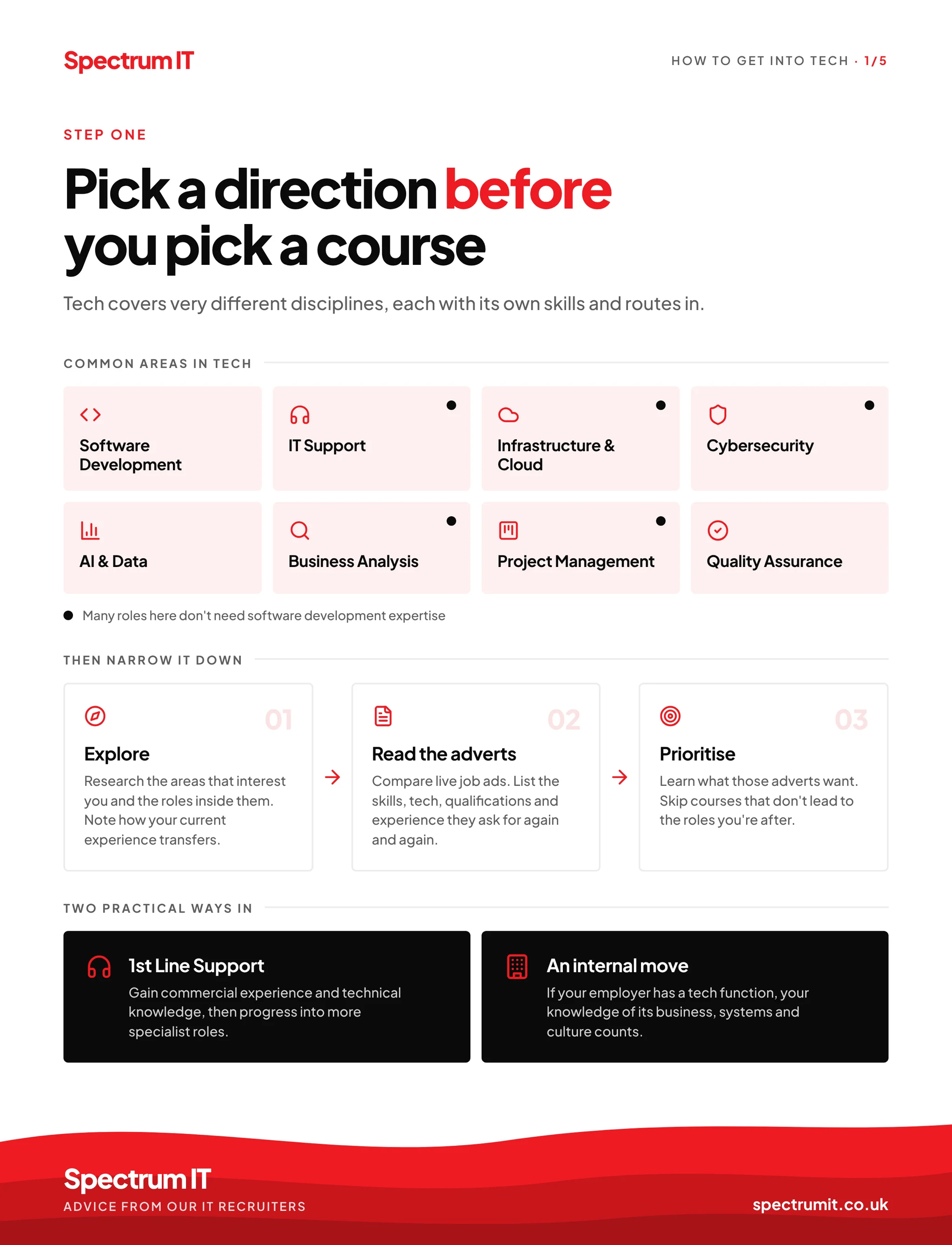
Identify what you want to do
A common mistake we see is people deciding they want a ‘job in tech’, without knowing what area of tech they want to work in. Technology covers a huge range of disciplines, each requiring different skills, experience and routes into the industry.
Some common areas within tech include:
Software Development
IT Support
Infrastructure and Cloud
Cybersecurity
AI & Data
Business Analysis
Project Management
Quality Assurance (QA)
Start by researching the areas that genuinely interest you and the types of roles available within them. Think about how your existing experience might transfer and what additional skills or knowledge you would need to develop.
Once you have an area in mind, look at current job adverts before deciding what to learn. Compare the skills, technologies, qualifications and experience employers repeatedly ask for. This can help you prioritise your learning and avoid investing time and money in courses that aren't relevant to the roles you actually want.
Our recruiters suggest that entry-level support roles, such as 1st Line Support, can provide a practical route into the industry. These roles can help you gain commercial experience, build technical knowledge and progress into more specialist positions over time.
Not every career change needs to involve changing employer. If you’re already working for an organisation with an established technology function, an internal move may be one of the most effective ways to begin your tech career. Your existing knowledge of the business, systems and culture can make you an attractive candidate for internal opportunities.
What employers are looking for and how to gain credibility
One of the biggest concerns candidates have is whether employers will consider someone without direct tech experience. From what we see, employers prefer candidates who can demonstrate that they’ve invested time in understanding their chosen area and are serious about making the move.
It can be tempting to start applying as soon as you decide you want to work in tech, but taking some time to build relevant knowledge and evidence of your skills can significantly improve your chances.
This might include:
Completing relevant certifications to demonstrate foundational knowledge
Undertaking online courses, which can be an affordable way to develop technical skills
Skills bootcamps for an intensive introduction to tech
Dedicated career-switch programmes
Building personal projects or contributing to open-source projects to showcase practical application rather than just theoretical understanding
Attending industry events and networking with people already working in your chosen field
Following developments in your chosen area of technology
One recent candidate we worked with had previously served as a Police Officer before deciding to retrain as a Software Developer. After completing a Software Engineering Bootcamp in 2022 and continuing to develop their technical skills, we placed them into a Full Stack Developer position. Their success wasn’t built on previous coding experience. It came from making a clear decision, committing to structured learning and demonstrating that commitment throughout the recruitment process.
The wider hiring market can also influence your route into tech. When competition for junior roles is higher, taking time to build practical experience and demonstrate your skills can help you stand out. When tech talent is scarcer, employers may be more open to career changers and self-taught candidates. Whatever the market looks like, continuing to build your skills and staying aware of opportunities will put you in a stronger position when the right role comes along.
Common myths about getting into tech
Changing careers into tech can feel intimidating, particularly when there are so many misconceptions and assumptions. Here are some of the most common things we hear from aspiring tech candidates.
“I need a Computer Science degree”
While some technical roles require formal qualifications, there are many opportunities that prioritise other skills, evidence of learning, genuine interest and enthusiasm.
“I’m too old to change career”
Career changers enter tech at every stage of their working lives. Employers are often interested in the wider experience candidates bring alongside their technical development.
“I need to learn to code”
Coding is essential for some careers but far from all of them. Many successful careers exist across infrastructure, cybersecurity, business analysis, project delivery and technical support without requiring software development expertise.
“A Bootcamp guarantees me a job”
Bootcamps can provide an excellent foundation, but they aren’t a guarantee of employment. They work best when combined with continued learning, practical experience and realistic expectations.
“AI is replacing entry-level jobs”
AI is changing some of the work traditionally carried out by junior technology professionals, but that doesn’t mean there is no route into the industry. What is changing is the skills employers value. Being able to use AI tools effectively, understand their limitations, solve problems and demonstrate practical ability is increasingly important alongside traditional technical skills.
The biggest mistakes we see candidates make
From speaking with candidates and employers every day, there are a few mistakes our recruiters see repeatedly.
These include:
Applying before developing enough relevant knowledge or practical experience
Having no clear idea of the kind of role they’re looking for
Completing course after course without applying what they’ve learned
Having unrealistic salary expectations for their first role in tech
A lack of awareness around the current job market
Our advice is to be realistic about where you’re starting from, the experience you already have, the steps you can take to strengthen your profile and the type of role you’re aiming for. Changing industries means building experience gradually before progressing into more specialist and senior positions.
If we were starting our career in tech again today, here’s what we’d do:
Start by choosing a direction rather than trying to learn everything
Focus on building practical evidence of your skills through projects and learning rather than collecting endless certificates
Take advantage of opportunities within your existing organisation where possible
Talk to people already working in the industry, attend events and keep learning
Be patient and keep building your experience – your first role in tech is the starting point, not the end goal
Before you start applying, you may also find these guides helpful as you prepare for your tech career:
Transferable skills
In-demand skills for 2026
How to optimise your LinkedIn profile
What tech recruiters look for in a CV
AI in Recruitment
Every tech career journey is different, and the more informed you are, the better equipped you'll be to make the right decisions for your next move.
Related Posts
How to Settle into a New Tech Role
22 Sept, 2026